

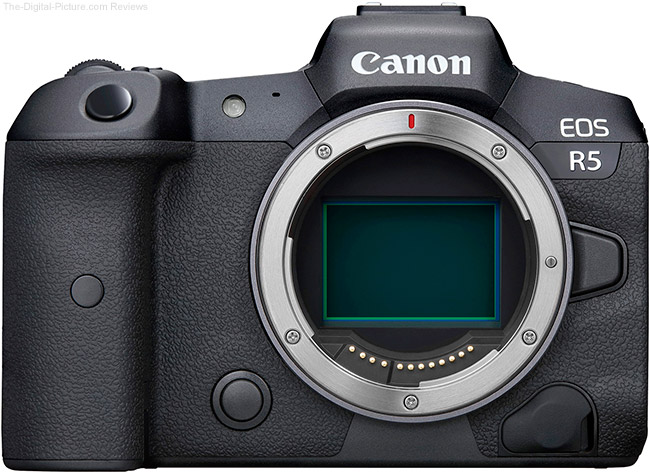
Comparing same-size imaging sensors, the lower the resolution, the larger the photosites. Larger pixel wells can collect photons at a higher rate than smaller ones, generating a higher SNR (Signal to Noise Ratio) that results in lower noise levels. Therefore, do not expect pixel-level noise performance from an ultra-high-resolution imaging sensor to match that from a similar generation low-resolution imaging sensor.
That said, the final output size is what matters in the real world. To make the Canon EOS R5 vs. Canon EOS R6 comparison relevant, the R5 image (oversampled in this case) must be reduced to 20 MP. An R5 image can be very simply downsized to R6 image dimensions, and then the R5 noise levels appear at least as good the R6 noise levels. DPP was used for downsizing the R5 images in that example.
In this comparison, Photoshop's Image Size method (using the default auto setting) was used for resizing. In this case, the R5 results are sharper than the R6 results, with noise becoming very slightly more apparent from the sharpening.
Noise levels do not appear to be a good differentiator between these cameras — high ISO noise levels are not a good reason to buy the R6 over the R5.
That said, the final output size is what matters in the real world. To make the Canon EOS R5 vs. Canon EOS R6 comparison relevant, the R5 image (oversampled in this case) must be reduced to 20 MP. An R5 image can be very simply downsized to R6 image dimensions, and then the R5 noise levels appear at least as good the R6 noise levels. DPP was used for downsizing the R5 images in that example.
In this comparison, Photoshop's Image Size method (using the default auto setting) was used for resizing. In this case, the R5 results are sharper than the R6 results, with noise becoming very slightly more apparent from the sharpening.
Noise levels do not appear to be a good differentiator between these cameras — high ISO noise levels are not a good reason to buy the R6 over the R5.
from Canon, Nikon, and Sony News, Deals and What's New at The-Digital-Picture.com https://ift.tt/3eUJ2O2
via IFTTT



0 comments:
Post a Comment